

Hélène Harder: Fatna's Story Is Political, Feminist, and Poetic
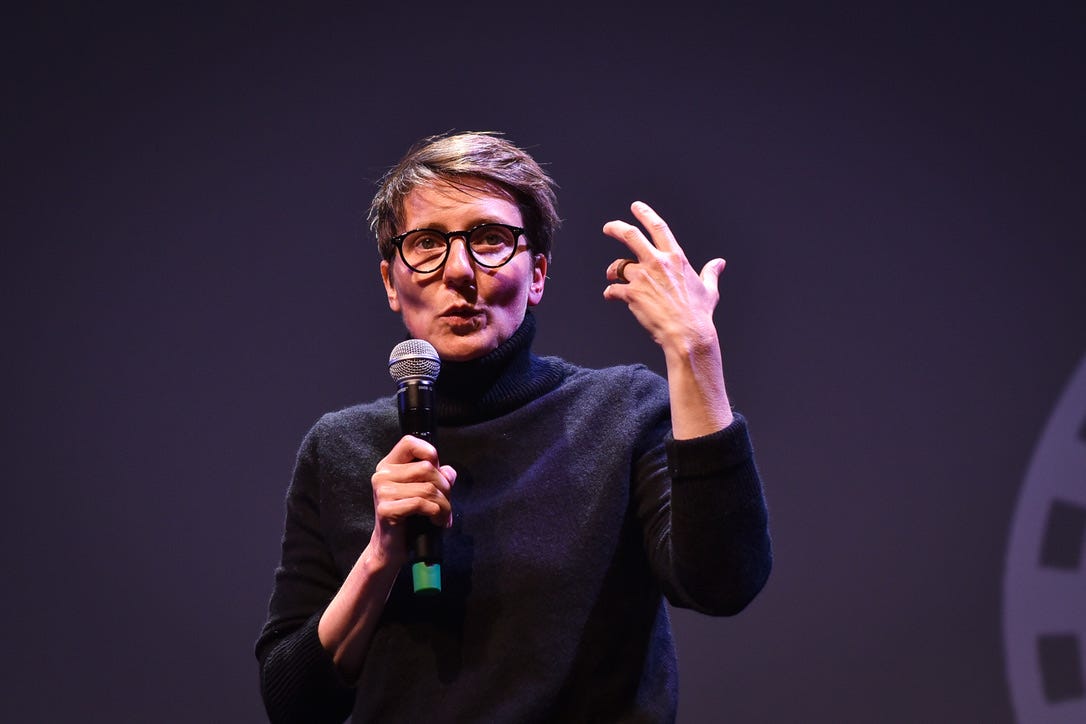
Hélène Harder discusses Fatna, a Woman Named Rachid, a film about a Moroccan woman whose name could not be erased, and whose story turns prison, memory, and resistance into a space of light.
![Abbas Souzian [Journalist]'s avatar](https://substackcdn.com/image/fetch/$s_!jkIz!,w_108,h_108,c_fill,f_webp,q_auto:good,fl_progressive:steep/https%3A%2F%2Fsubstack-post-media.s3.amazonaws.com%2Fpublic%2Fimages%2Ffa826ba8-cee6-41c0-830f-dfeaee93b2ca_1330x1330.jpeg)
How often does a former political prisoner return to prison, not as a prisoner, but to work with those still inside? To meet young detainees, organize cultural activities, and continue the slow work of civil society?
In Fatna, a Woman Named Rachid, Hélène Harder follows Fatna El Bouih, a Moroccan writer and activist who was arrested, disappeared, and tortured during the country’s Years of Lead. In prison, she was given the male name “Rachid”, an attempt to erase part of her identity.
Through Hélène Harder’s camera, we meet Fatna not only through the violence she survived, but through the life she continues to build in Casablanca today. The film follows her work with prisons, young people, women, and civil society, while returning to the memory of a political past that still shapes the present.
In this remote conversation between Istanbul and Paris, we spoke about her filmmaking process, her way of looking at Fatna, the use of archives, cinema inside prison, and the long path of making the film. This interview was conducted on the occasion of Fatna, a Woman Named Rachid screening at Hot Docs 2026.
Women Who Refuse to Disappear
In your films, we often meet women who are trying to find their place in spaces shaped by men or by strong social limits. Where does this interest come from, and how has it shaped your way of making films?
I grew up in Paris with three sisters and was largely raised by my mother on her own, so from a very early age I became aware that women still have to negotiate their place, agency and autonomy in society. Like Fatna, I was told to be discreet, to not raise my voice, to not take too much space as if my mother feared that the independence she was nevertheless passing on to us might also put us at risk. And it felt unfair to me and outrageous. My philosophy studies interrupted by a car accident that was a life and death experience, I turned to cinema to rebuild myself and seized any opportunity to travel, meet people, and displace myself. Today as a documentary filmmaker, life has led me to meet and to film women who challenge gender norms and limitations like Fatna El Bouih in Morocco in Fatna, a woman named Rachid or like Seyni N’dir Seck and the incredible women soccer players in Senegal in my previous film Ladies’Turn. By refusing and transgressing those limits at a young age, Fatna created spaces of expression and agency for herself and others. It involves taking risks indeed, changing roles and moving forward. That in itself is cinematic.
The title of the film refers to a painful moment: Fatna being given the male name “Rachid” in prison. How did you translate this violence against her name, identity, and gender into the visual and narrative form of the film?
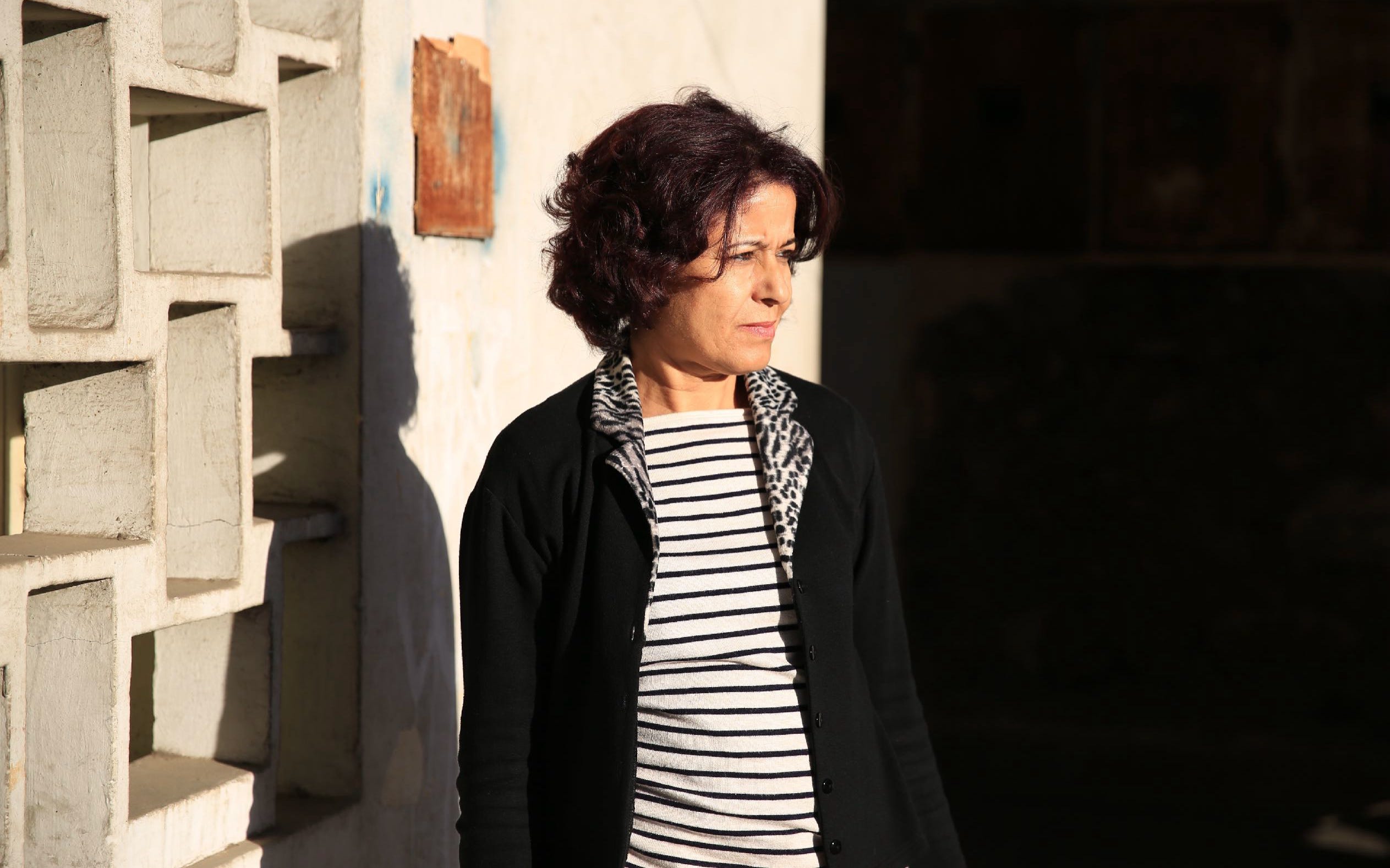
What interested me from the beginning is the way Fatna reappropriated this story, as the first - still today almost the only - former woman political prisoner to have written in Morocco about this violence, which was clearly an attempt at erasure. That’s the reason the title of the film echoes the title in french of her book Une femme nommée Rachid, first published in 2000 in Morocco (Editions Le Fennec) but it adds FATNA. The story is less about what Fatna went through in the past than about how she transformed it in her activism today. She transformed the violence and the stigma of this male name’s imposition to become Fatna, the woman named Rachid. One of the first scenes of the film shows her laughing about it with her comrades, Maria and Widad. The straight logic of the torturers appears risible and pointless. So the name Rachid didn’t erase Fatna, it made her reappear fully as Fatna El Bouih, as a political activist, a writer and a citizen. And I knew from the beginning that this process is an important part of the narrative in the film. She is who she is today because she not only survived forced disappearance and torture but she spoke out and wrote about it, revealing what should be silenced : the presence of women in political struggles, which means not to pit Fatna against Rachid but to highlight how Fatna challenges what Rachid is supposed to be, questions what men and women are supposed to do, changes conformist representation of men and women.
The visual form of the film embraces this process of disappearance and appearance. Fatna is always about to disappear, on the verge of the frame or that she appears in a very visually constrained environment so our emotion is related to her taking the space and the frame within. Fatna’s story is not a story of liberation or emancipation that would be a very western Hollywood narrative. It is about a woman who has found for herself and others a way to create change, a place of agency, life and hope in prison, the place where she paradoxically almost died but fully became at the same time, a political subject. It is what moves me so much about Fatna’s path and what I wanted to share. Fatna’s journey reminds us what it takes to be a woman activist.
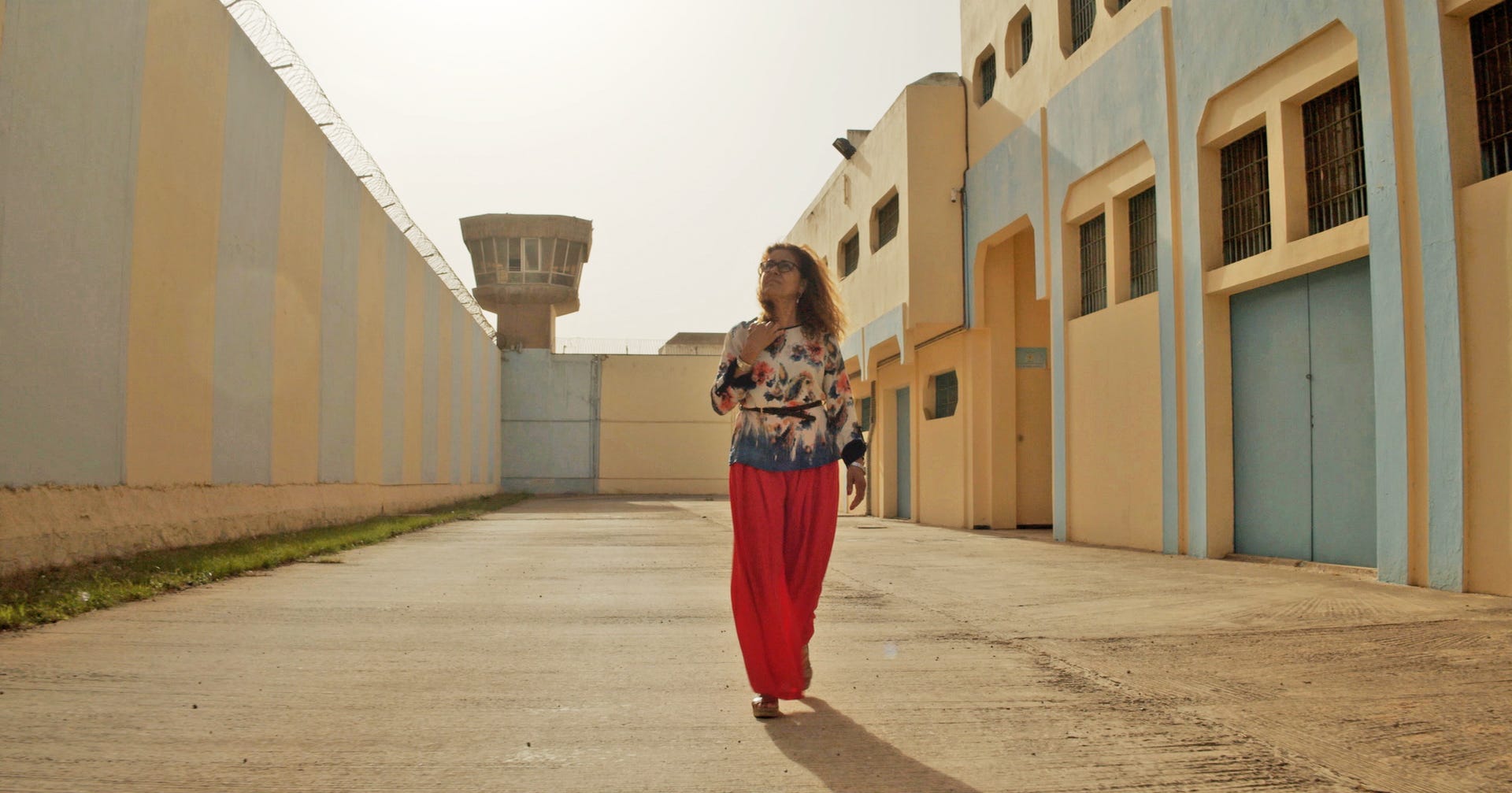
The film speaks about prison and political violence, but it does not keep Fatna only in the position of suffering. Today, she is active and works with prisons and young people through culture. During the editing process, how did you balance her painful past with her active life today?
Fatna and I didn’t want to make a film about her past suffering and I certainly didn’t want to reenact this suffering or to expose it. Fatna is very pudic about it and I had to find the right distance to respect that ; so when Fatna in the film allows herself to let it go, we connect with her at the right place : the emotion is then powerful and meaningful. Suffering is not hard to imagine. Trauma is always there, it is inscribed in Fatna’s body, it won’t disappear, there is nothing to overcome. But Fatna learned how to live with it and to create things out of it. So in the writing as in the editing of the film, I didn’t want to oppose the past and the present but to mix them all along the film, so they co-exist. This was very important to me to have a non-linear treatment of time and to circulate back and forth through time as Fatna circulates through Casablanca. This narrative structure which influenced my choices during shooting, gives depth and meaning to Fatna’s work and emotions today. That is what really matters.
Archives, Casablanca, and Political Memory
The film has a strong relationship with archives and historical memory. Can you talk about your access to archival material and how you chose what to use? Did you face any specific difficulties in Morocco?
To play with time and build this non linear narrative structure I had the chance to have access to incredible Moroccan films shot in Casablanca in the 70’s. I quote for example several shots of the documentary film From 6 to 12 by Ahmed Bouanani, a beautiful black and white film shot in Casablanca in 1968 like Vertov’s film just 3 years after police shot and killed students and young people protesting in the streets of the city (23 mars 1965). About some meaningless events by Mustafa Derkaoui was shot in Casablanca in 1974, the same year Fatna was first arrested for leading strikes at her High school. Both films were censored soon after they were made. But as Fatna reappears today, those films invisible for a long time, resurfaced lately in the most unexpected manner and got restored thanks to artists like Touda Bouanani, filmmakers like Ali Essafi, art curators like Léa Morin or researcher Marie Pierre-Bouthier. So I had the chance to see them and to get inspired by them : they gave me a sense of the city in the 70’s ; you can feel the oppressive and paranoïd atmosphere of the Moroccan “years of lead” just by watching them.
And It helped me to create this effect of continuity between past and present through Casablanca. The film is also a portrait of Casablanca, a city that played an important role in Fatna’s path and activism.
Did you face any limits during the production or presentation of the film? I mean limits that affected the story, the structure, or your cinematic choices.
It took my producers and I a long time to secure funding both in Morocco and internationally : in Morocco the story is still sensitive and I am a foreigner ; in France for example, we had to prove that the story matters outside of Morocco even though France colonized Morocco and french police taught the torture’s techniques used by Moroccan police. This couldn’t be an argument.
Filming the activities of Fatna’s NGO in prison was also a challenge. I documented for years the workshops and the festival of cinema held by Fatna’s NGO in prison before I could request an official shooting permit for the film.
Finally, I agreed to censor the name of Fatna’s torturer for the film’s broadcast on Moroccan television whom she mentioned in her book and during a scene we shot already. So, we had to work with the sound mixer to replace his name with the word “police commissioner”. It still hurts my ears but people don’t notice it and it made it possible for the film to be widely broadcast on 2M TV. In the end it doesn’t matter: it is not a question of one individual’s responsibility but of a system so it is not a big deal if the torturer’s name disappears as long as Fatna El Bouih’s name appears clearly.
Cinema Behind Prison Walls
The film follows Fatna’s work with prisons today, including the idea of bringing cinema into prison. What does cinema mean in a place like that?
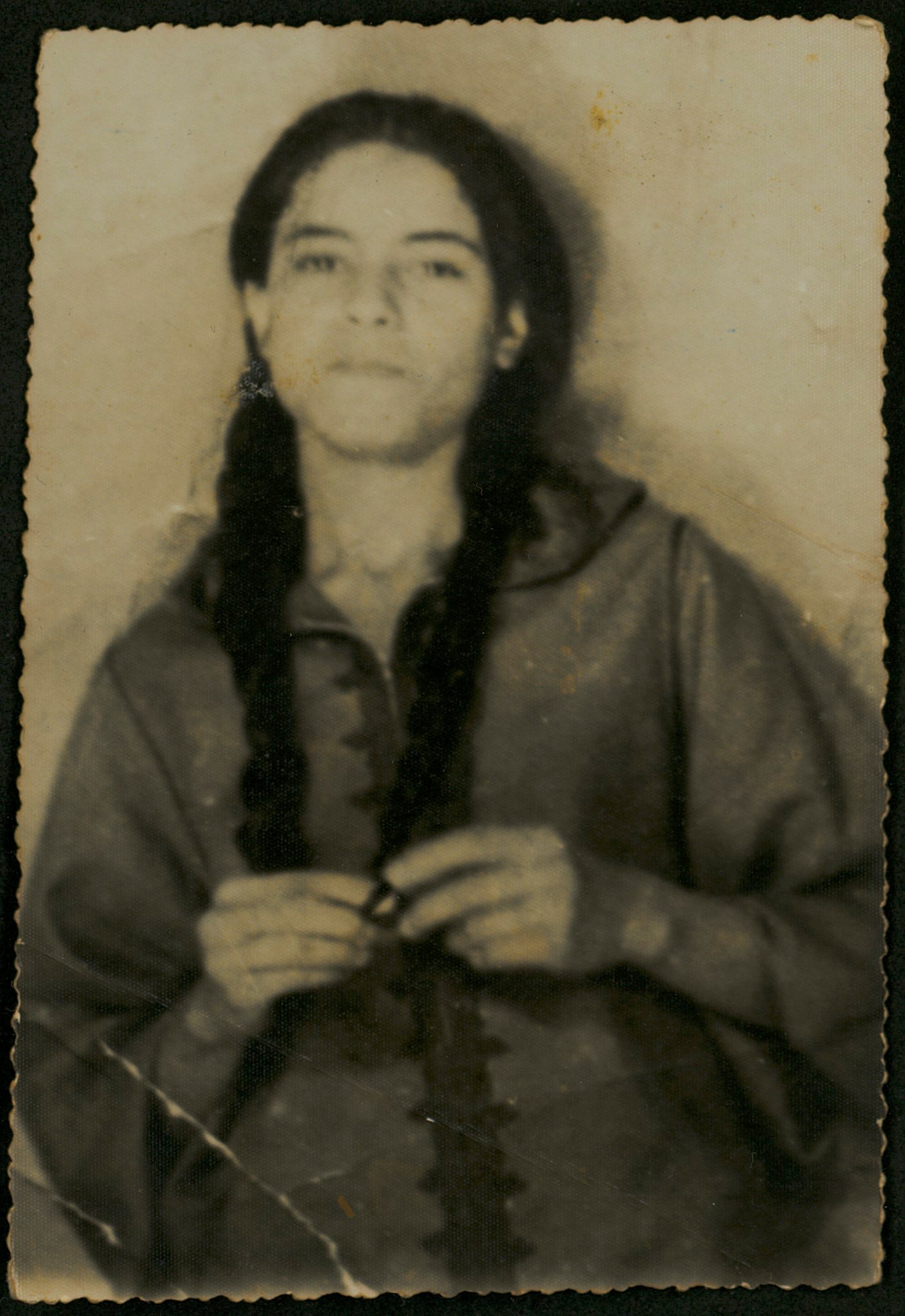
Fatna belongs to a generation who had big dreams of political change and cinema was part of this dream. She was born the year of Morocco’ independence and was the first girl in her village to go to high school in Casablanca. Her entire generation was sacrificed by repression and censorship but Fatna survived it and, after years of silence and reconstruction, still pursues today her dream of change. Fatna once told me that the first thing we wanted to do after getting out of prison was to lock herself away in a movie theater. Bringing cinema in prison for Fatna is a way to bring light behind bars and to share with the young detainees the right to dream, to escape, to get educated, to see and to be seen. It is a powerful educational tool for democracy since the young people not only watch the films together but discuss them, exercise their judgment, learn to argue and then make movies themselves to tell their own stories. And it is also a way to open the closed doors of prison and let artists and members of civil society in.
Trust, Distance, and the Possibility of Change
Your films often stay very close to people, but they also carry a wider social and political context. In Fatna, a Woman Named Rachid, how did you find the right distance between intimacy and history, especially through the editing, music, archives, Fatna’s inner voice, and her life today?
Fatna and I developed over the years a strong relationship based on trust, mutual respect, and understanding of power dynamics between us without knowing if the film would happen or not. And the film became possible because we had built this relationship and Fatna gave me access to her, even in her most vulnerable moments. It is a very intimate, personal and emotional journey we had to go through and it implies a huge responsibility. I was fully aware of it. Little by little we found the story we wanted to tell together and it was easier to include others in the process. The collaborative work with my producers and the artistic team helped me to create a distance and to shape the film. And it helped Fatna also to take distance with her own story. The writing of the voice over together was an interesting part of this process because Fatna had to let go of a lot of things and I had to make choices better for the film I didn’t expect. Her own story was not only hers anymore and she was brave and generous enough to take this risk and trust the process. And the film was taking over and I had to listen to it. It was a challenging but powerful moment for both of us. We created together a film that would not belong to either of us but to the audience at the end.
How did your relationship with Fatna change during the making of the film? Was there a moment when you felt that she was not only the subject of the film, but also someone actively shaping it with you?
Fatna has been very involved in the entire process of making the film and she was indeed actively shaping it with me even though she never asked to be in the edit room or to co-direct it. She didn’t want to control the process, she wanted to learn about herself through the process. It is her story and she agreed to make it accessible to others through cinema. Our relationship became even stronger by making the film because we had to overcome so many obstacles. And we both had the same conviction: Fatna’s story is important to share not for personal reasons but for political, memorial and even poetic reasons.
Leaving the Cinema With Hope
The film is now being shown at Hot Docs to audiences who may not know much about Morocco’s political history. What question would you like them to leave the cinema with?
What am I doing to change things around me ? I would like people to leave the cinema with those sparks of light and hope that Fatna is still spreading and to feel that they want to pass them on - in today’s world where repression, political violence, wars and genocide once again prevail, we can feel powerless, frighten or desesperate. More than ever we need to resist those feelings, connect with one another and commit to not accept the world order. We need to experience our shared humanity, our collective agency and the joy coming out of it. As Fatna says and shows us in the film, “Maybe…maybe another world is possible.”
Fatna, a Woman Named Rachid screened twice at Hot Docs in Toronto: on Friday, May 1 at 2:30 PM at TLB 2, and on Saturday, May 2 at 11:00 AM at TLB 1.
Toronto Screening Tickets
Available via the Hot Docs box office.More About Fatna El Bouih
Read more about Fatna El Bouih on Wikipedia.More About Hélène Harder
Read more about Hélène Harder on Wikipedia.More Information About the Film
Follow the film’s official Instagram page: @fatna_doc.
License
This piece, published by Souzian Dispatch and written by Abbas Souzian, is licensed under the Creative Commons Attribution 4.0 International License (CC BY 4.0), unless otherwise noted.
Images & Videos Credits and Rights
Certain images and videos included in this piece are not owned by Abbas Souzian and are not covered by this license. Rights to those materials remain with their respective copyright holders.