

In Conversation with Marjolein Busstra, Director of House of Hope
At Hot Docs 2026, the Dutch filmmaker speaks about Manar, childhood under occupation, and the effort to show Palestine beyond victimhood.
![Abbas Souzian [Journalist]'s avatar](https://substackcdn.com/image/fetch/$s_!jkIz!,w_108,h_108,c_fill,f_webp,q_auto:good,fl_progressive:steep/https%3A%2F%2Fsubstack-post-media.s3.amazonaws.com%2Fpublic%2Fimages%2Ffa826ba8-cee6-41c0-830f-dfeaee93b2ca_1330x1330.jpeg)
Documentary filmmaking on Palestine has many dimensions. There is a great deal of information and a great deal of pain, and everyone can look at Palestine from a different angle. That is why there is such a wide variety of documentaries coming from this land.
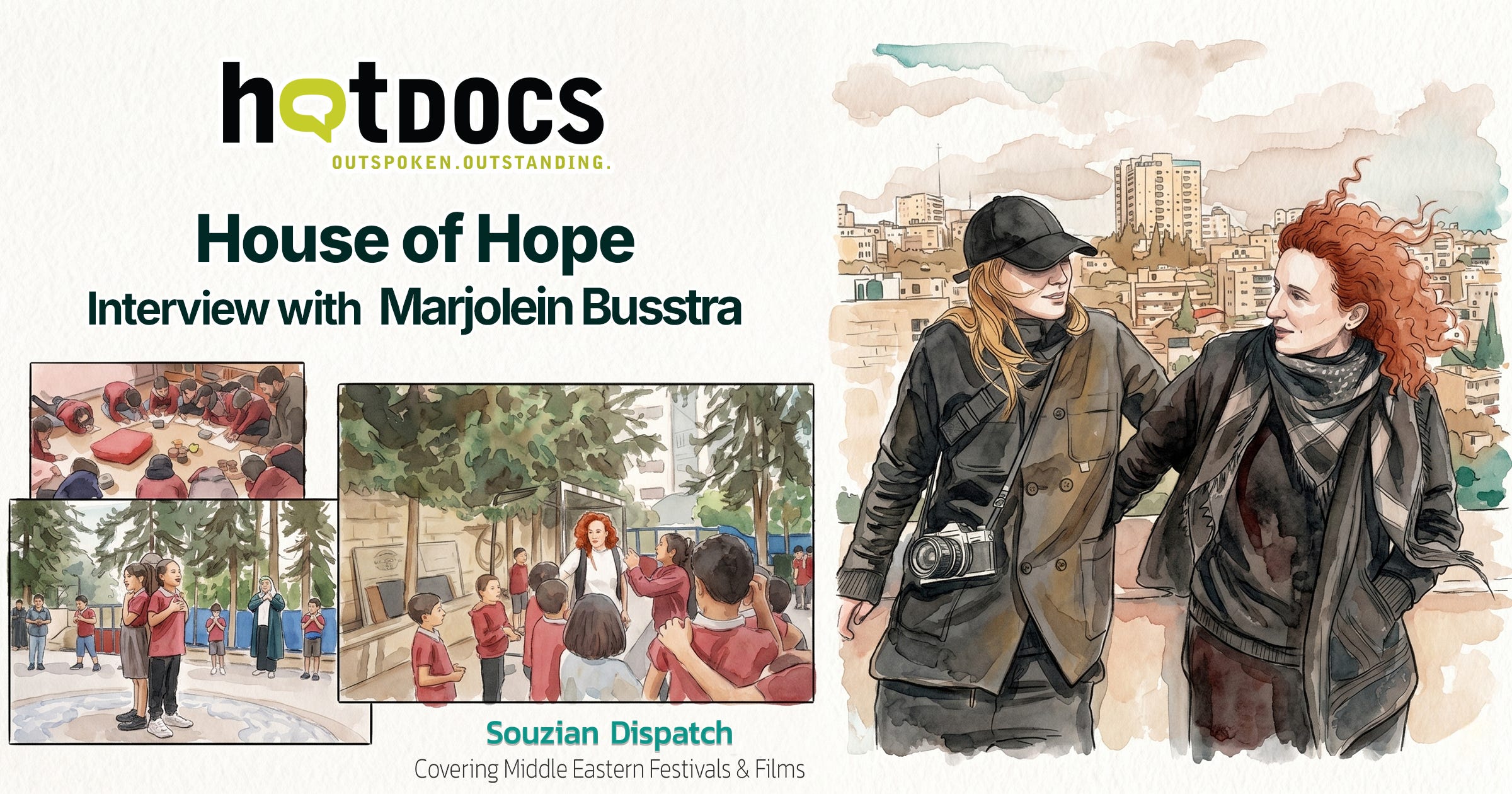
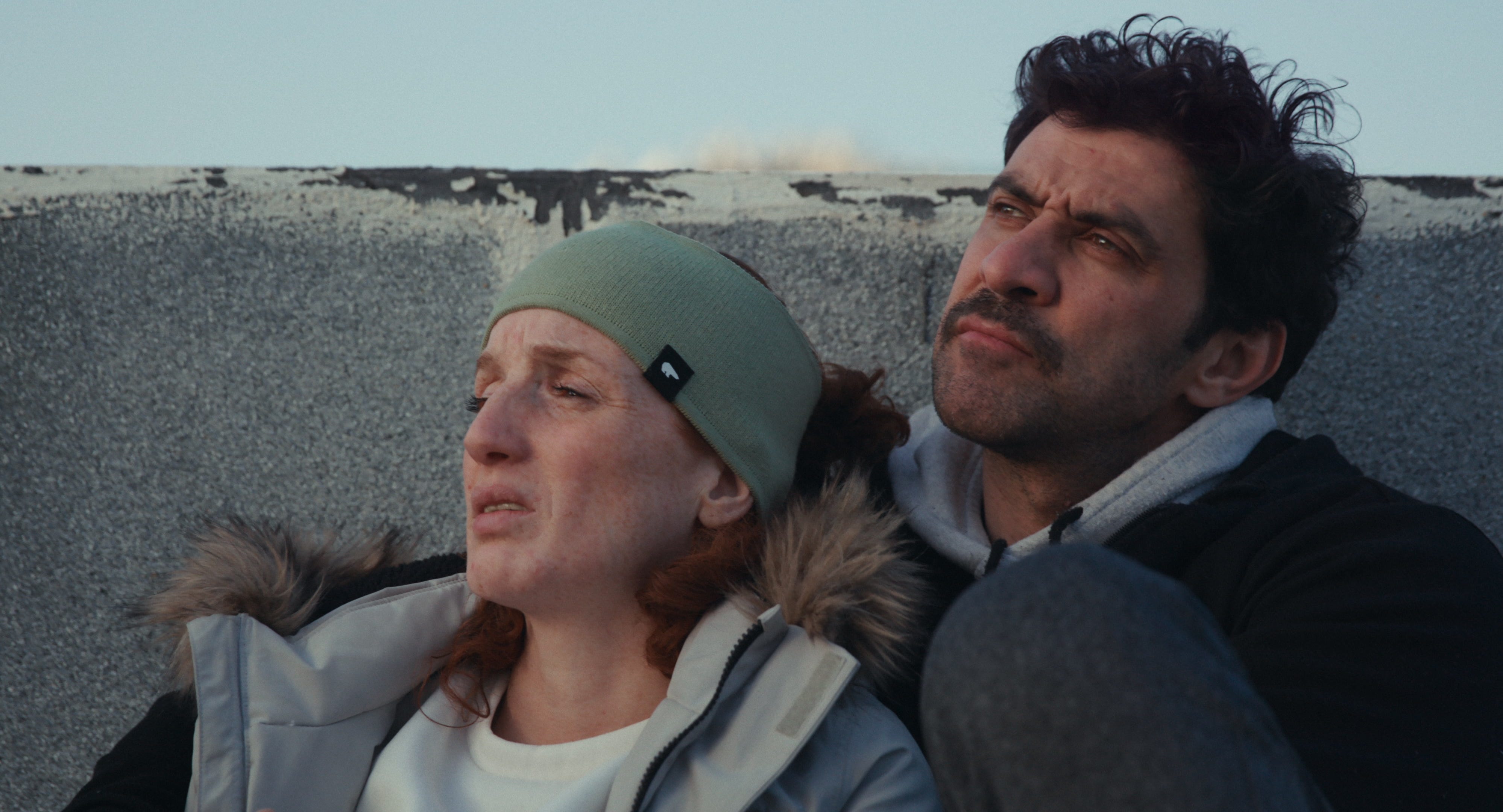
Marjolein Busstra’s film House of Hope turns to one specific space. It follows a school built by Manar and her husband Milad, a place that tries, despite fear, danger, and daily suffering, to protect children from carrying even more trauma.
On the occasion of House of Hope screening at Hot Docs 2026 in Toronto, I spoke with Marjolein. After we exchanged greetings, we briefly talked about the fact that she comes from the Netherlands and about how she approached the film from outside the culture of the Middle East. She said that working with a Palestinian crew and finding a Palestinian producer familiar with the particular realities of the West Bank had been a clear priority from the beginning.
She then asked me, as someone from the Middle East, how I saw the film. I told her I had not expected her to understand Middle Eastern culture so well and reflect it so clearly in the film. It was obvious to me that she had come to know the atmosphere very well. Marjolein added that this was exactly because of the local collaborators around her.
How House of Hope Began
You first met Manar more than 15 years ago as a photographer, and over time that connection became a deep friendship. What made you decide, after all these years, to pick up the camera and turn this particular chapter of her life into a film?
I realized the school had become something truly unique and was taking real shape. In the Netherlands we call Steiner schools “free schools.” A school like that in occupied territory is a contradiction in itself. The core values of Waldorf education are about seeing the whole child and giving space to develop: head, hands and heart. To learn, a child needs to feel safe, and to express themselves they paint and make things with their hands. All of this stands in such stark contrast to the reality these children live in. Then I heard the school had lost a child. There is little place for children to play, so the children play football in the streets and on construction sites. A boy playing was killed when rubble collapsed on him. After that I started asking myself: how does this school build a safe haven in a place so profoundly unsafe?And how does Manar carry that?
You have said that this film is more about listening and witnessing than making a political statement. At the same time, the film unfolds in a space shaped by occupation, fear, and daily pressure, but it does not present its characters only as victims. Why was that important for you, and how did you find the balance between showing injustice and preserving the humanity of the people in the film?
I believe it is stronger to show what is happening, to let scenes unfold through the psychology of the main character so the audience can truly feel alongside her. That was my aim: what does it cost Manar to run this school, to be a mother, to lead a life under this brutal occupation and the constant threat of violence? My style is observational, and through Manar’s inner journey I think the film makes very clear where the injustice lies and how long it has been there.
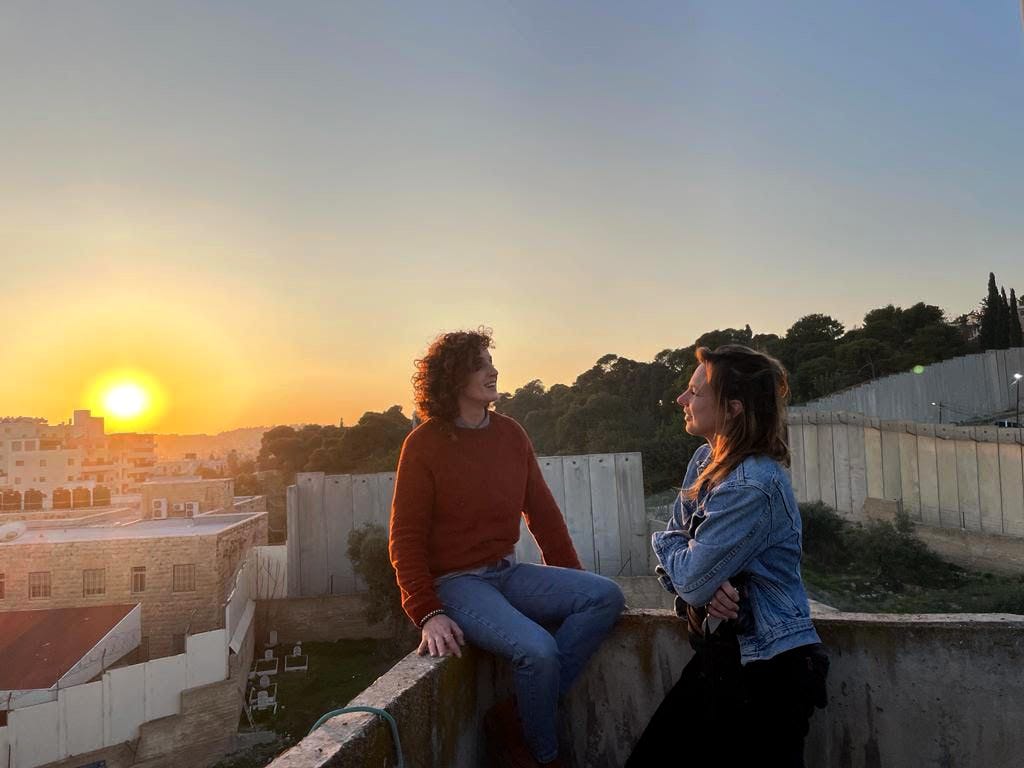
People are more than war or occupation. I sometimes feel we project that as an identity onto Palestinians, as if it is all they are. But Palestinians also have ambitions, passions, ordinary lives: they celebrate birthdays, go to work, take their children to school. For me the challenge was to keep the people at the center, to show daily life without denying the occupation, but also without letting the occupation become one and the same as the people living under it. The long evening walks I took with Manar helped me find that balance.
After October 7
After October 7 and the rise in violence, how did the film itself change? Did the reality around you push you to rethink the story you wanted to tell?
Nothing changed in my initial vision for the film. Everything only became more urgent. We must not forget that the situation was already very bad. The occupation has been there for decades, and the illegal settler expansion was already moving at enormous speed before October 7. Manar describes the settlements appearing around her like popcorn popping up. What I did see after October 7 was complete devastation and deep anxiety. The hope for a better future had gone. The question that drove the film became even sharper: what does it cost Manar and Milad to keep the school standing? Do they still hold onto hope?
After October 7, the closure of the route between the West Bank and Jerusalem meant that many people could no longer get to work, and poverty in the West Bank grew even worse. There were also several cases of men being taken from their homes at night. Children were speaking at the school about the absence of their fathers and brothers, without knowing when and if they would return home.
Phone Footage, Stillness, and the Photographic Eye
In the film, you use a mix of professional cinematography, animated still images, and Manar’s own phone videos. Was that also a way of allowing her to have a stronger presence in shaping the narrative and point of view?
Yes, I felt it was both an artistically strong choice and an honest one. The animations serve to zoom out, to give space to Manar’s inner world, the things that cannot be captured in a single scene. Her own phone footage carries something no camera crew could capture. With Manar’s voice over her iPhone videos you come extraordinarily close to her. You hear and feel the desperation directly. Those moments speak volumes.
Your background is strongly rooted in documentary photography. How much did that photographic way of seeing shape the final form of House of Hope? And how important was it for you to keep that visual sensibility present in the film?
My background in photography taught me to wait for the moment and this film Especially needed patience and let things unfold. That sensibility runs through the entire film. But I am also a director who makes conscious choices: which scenes to seek out, which moments to pursue, how to shape a story. For me the medium serves the story. I look at what form best serves what I want to tell. Making an observational film that feels urgent was something I had always wanted to do, and this story lent itself completely to that form. I had to be very patient and sometimes force myself to hold back, but that challenge was deeply inspiring. Everything I had made and learned before came together in this film. My cinematographer, the Palestinian Abu Mosab, also comes from a photography background. We found each other immediately in terms of style and shared the same ideas about form. We could talk for hours about how the story could be made stronger visually.
The School as Shelter, and Its Limits
In the film, the school feels like a safe space in the middle of a very anxious reality. At the same time, the film also shows how deeply war trauma shapes the lives of children and teachers. How did you think about the school as both a place of care and a place marked by ongoing trauma?
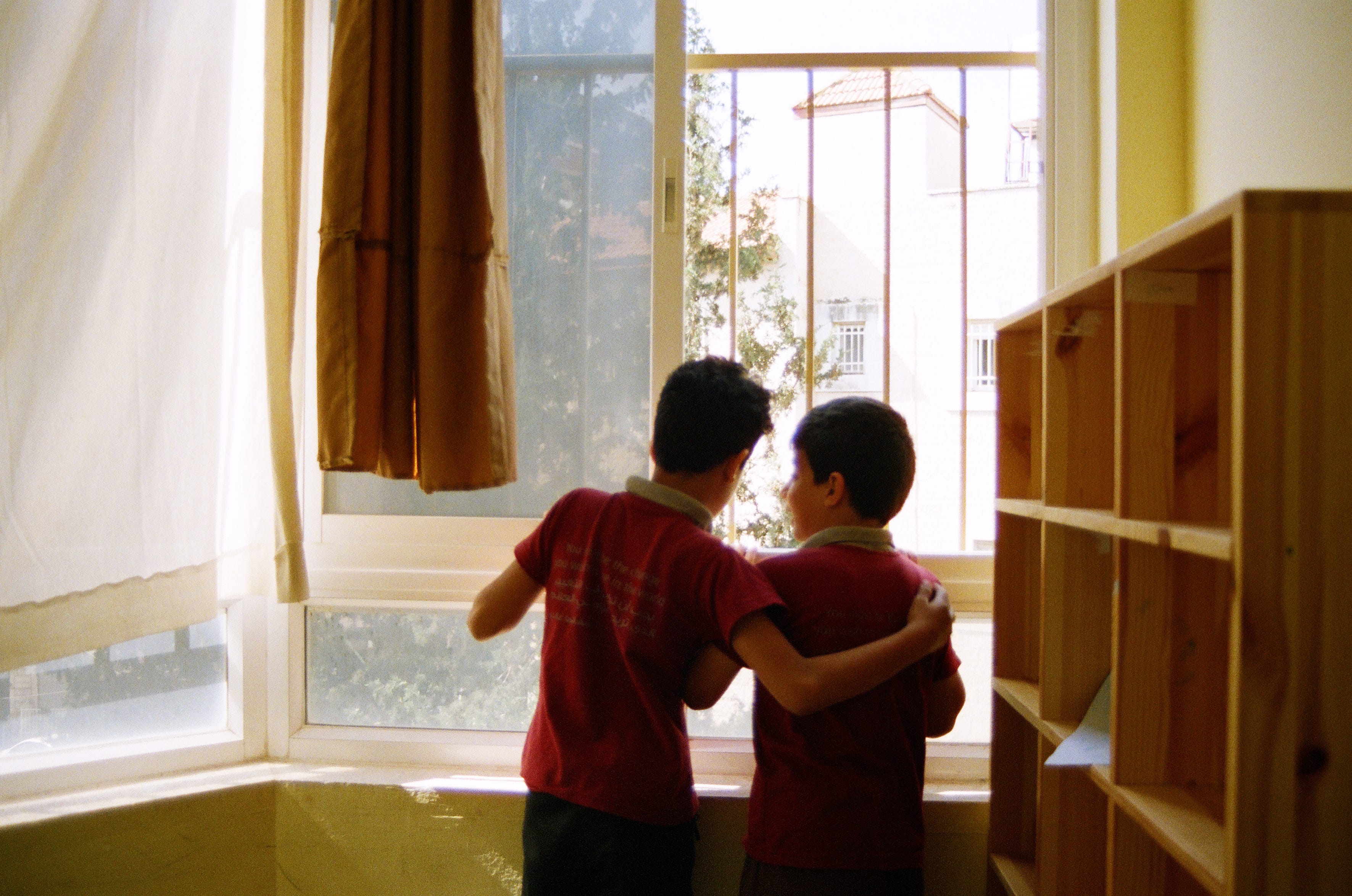
It genuinely is another world for the children. That said, we should not forget that the teachers also live under occupation, carry their own traumas and their own loss of hope. The suffering seeps into the school. The occupation rattles at the school gate. And yet it remains that warm, safe place. There are very few spaces where children learn to speak about trauma. The fact that the school facilitates the expression of fear and frustration through its way of teaching is unique. It gives children a foundation to stand on. That is also why the school is in itself an act of resistance. We stay. We invest in the next generation. We give them strength and do good even when bad is done to us.
The children were excited by the film crew, they all wanted to wear the microphone, they played with the team, and a warm and intimate atmosphere developed around them. At the same time, after October 7 I noticed changes in the children: they seemed more tired and more afraid, and it took time for them to become a little calmer again.
Waldorf education has trauma-informed thinking built into its DNA. It sees the whole child, offers rhythm, safety and space for emotional expression. In that sense the school is genuinely a place of care and repair. But you cannot truly heal when you are retraumatised every single day by an ongoing occupation. The school offers a protected space, an interruption, not a solution. That tension is something the film does not resolve, because the reality does not resolve it either.
Making the Film Under Pressure
I also wanted to ask about the process of making the film itself. This project took around three years. During that time, how much were fear and daily uncertainty part of your experience and your crew’s experience? And was there a particular moment during filming that has stayed with you strongly?
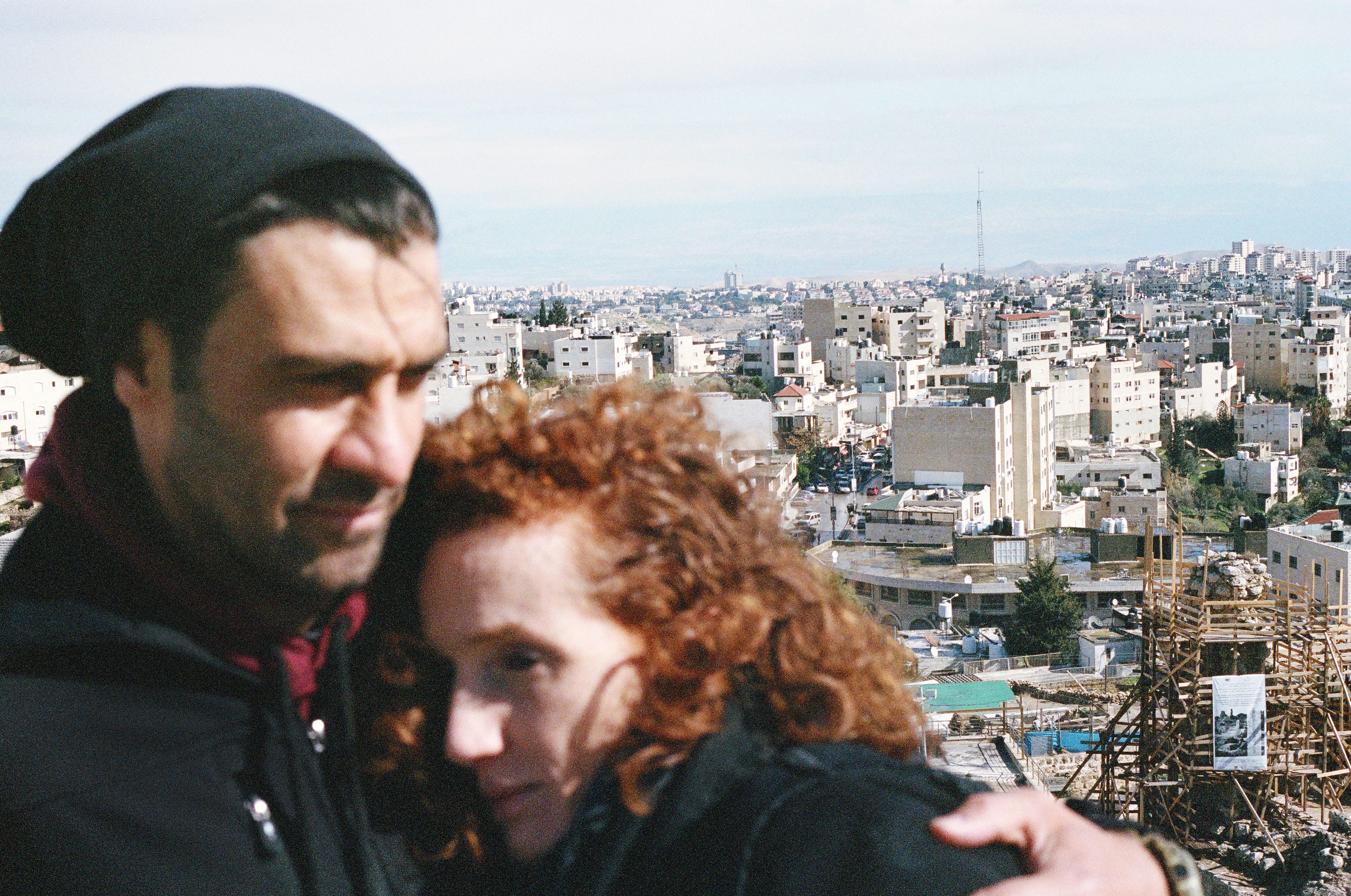
I was always deeply worried about my cinematographer. Unlike me, he could not travel through Israel but had to enter the West Bank via Jordan, passing through countless checkpoints and settlements. He is fearless, but he was harassed by soldiers at checkpoints and had to drive away fast from settlers more than once. On two occasions I filmed alone because he could not cross the border after Israel had closed it with Jordan. For my own part, I had to stay vague at Ben Gurion airport and even during questioning at Schiphol when flying El Al. I could not say openly what I was going to film. There are many known cases of filmmakers having their material confiscated or being denied access once the authorities knew they were making something about Palestinians. That was stressful because I wanted to finish this film. But all of that fades next to the actual danger my cinematographer faced. It made me even more aware of the privilege of being white and European, of always being able to go where you want. Palestinians live in a genuine apartheid regime.
What has stayed with me most is a different kind of moment. We were still looking for a sound recordist, and Manar asked me to choose someone who lived on their side of the wall, because those Palestinians have so few opportunities. That person became their neighbour Mahmoud Faroun, who had studied film but had barely been able to gain any work experience. His connection to the neighbourhood, the school, the families, and his shared experiences with Manar and Milad more than made up for that.
What the Film Leaves Behind
Now that the film has gone from its world premiere at IDFA to Hot Docs, what would you most like international audiences, especially in Canada, to take with them from Manar’s experience and from the world of House of Hope? Do you hope the film can speak to something beyond a specifically Palestinian story?
At first Manar found it difficult to show herself in her vulnerability. During our walks I told her the film would connect so much more deeply with people if I could show what it truly costs her to keep the school standing. That understanding settled in her slowly, and she was brave enough to let me stay very close on a day when she broke down and had to cry in the corner of an empty classroom. I thought: she is about to push the camera away. But she let it happen and forgot we were there. That same evening she told me she had been able to let go because she suddenly realised it was not only about her. It was about all Palestinian women, and perhaps about all women who live under occupation or in war and still try to build a good life and care for those around them.
In the end, Busstra says that as a filmmaker, the only thing she can do is bring these people’s voices honestly to the world. I thank her for taking part in this conversation.
House of Hope will screen twice at Hot Docs in Toronto: on Thursday, April 30 at 8:30 PM at TLB 1, and on Friday, May 1 at 10:30 AM at TLB 1.
Toronto Screening Tickets
Available via the Hot Docs box office.Support the School
Visit the ShareDoc donation page.More Information About the Film
Visit the film’s page at 100% Film.
Update: The film was winner of Hot Docs 2026
License
This piece, published by Souzian Dispatch and written by Abbas Souzian, is licensed under the Creative Commons Attribution 4.0 International License (CC BY 4.0), unless otherwise noted.
Images & Videos Credits and Rights
Certain images and videos included in this piece are not owned by Abbas Souzian and are not covered by this license. Rights to those materials remain with their respective copyright holders.